
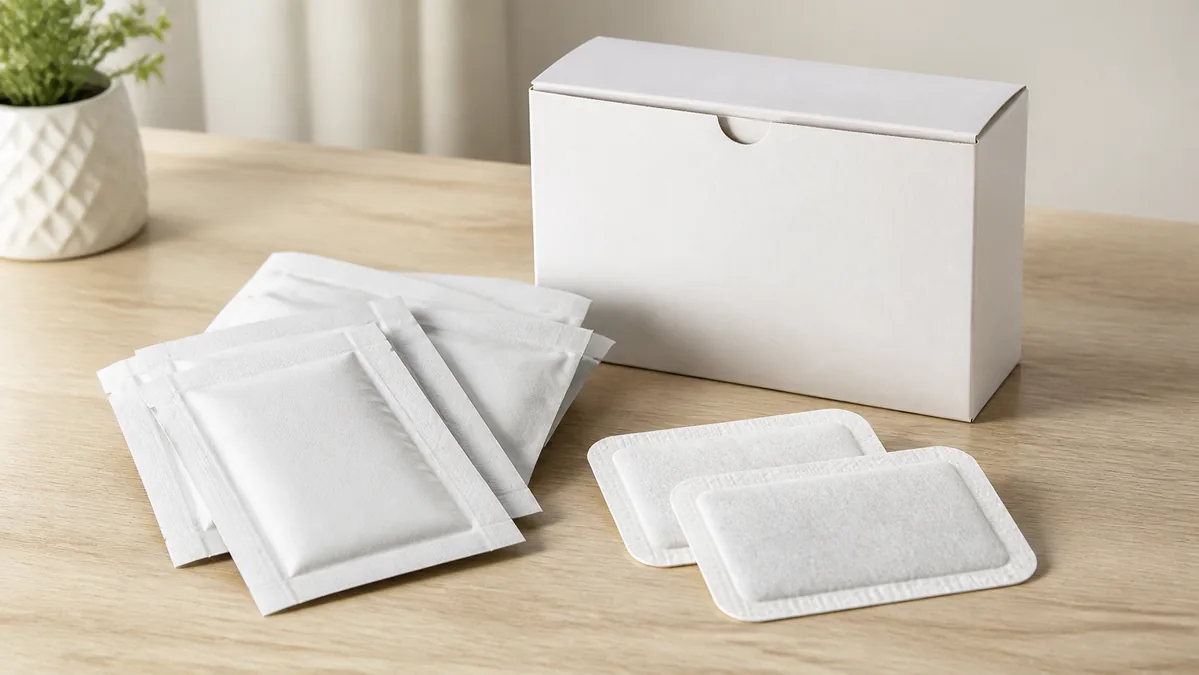
Heating patches are portable warming products designed to provide steady heat without electricity. Most disposable heating patches use an air-activated heating system: once the sealed package is opened, oxygen reaches the heating material and starts a controlled heat-producing reaction.
They are commonly designed for the abdomen, back, shoulders, neck, hands, feet, and other areas where users want additional everyday warmth and comfort. For B2B buyers, heating patches can also be customized in size, shape, heating duration, packaging, branding, and product structure.
This guide explains how heating patches work, the main types available, common materials, typical applications, and what brands and distributors should check before sourcing warm patch products or private label heating patches.
What Are Heating Patches?
Heating patches are wearable or portable products that generate warmth for a set period after activation. Unlike electric heating pads, most disposable heating patches do not require batteries, charging, or a power outlet.
- Lightweight
- Individually packaged
- Easy to carry
- Designed for single use
- Suitable for daily use, travel, outdoor activities, and cold-weather situations
You may also see these products described as heat patches, self heating patches, body heating patches, air activated heating patches, or warming patches. The terms are similar, but product structure, heating temperature, duration, size, and application can vary.
How Do Heating Patches Work?
Most self heating patches use an air-activated heating system. The heating material may include components such as iron powder, activated carbon, salt, water, and absorbent mineral materials.
When the outer package is opened, oxygen enters the patch. The iron-containing material gradually reacts with oxygen, and this oxidation process releases heat.
Open the package – expose the patch to air – the heating material reacts – the patch gradually warms up.
What Controls the Heating Temperature?
The performance of a heating patch depends on more than the heating formula. Material ratio, air permeability, nonwoven structure, patch thickness, heating area, environmental temperature, and product size all affect the result.
The breathable outer material is especially important because it helps control how quickly oxygen enters the heating layer. Good design requires a balance between temperature, heating speed, and heating duration.
What Are the Main Types of Heating Patches?
Heating patches can be designed for different body areas and use scenarios.
| Type | Common Application | Typical Feature |
|---|---|---|
| Body Heating Patch | Abdomen, back | General-purpose design |
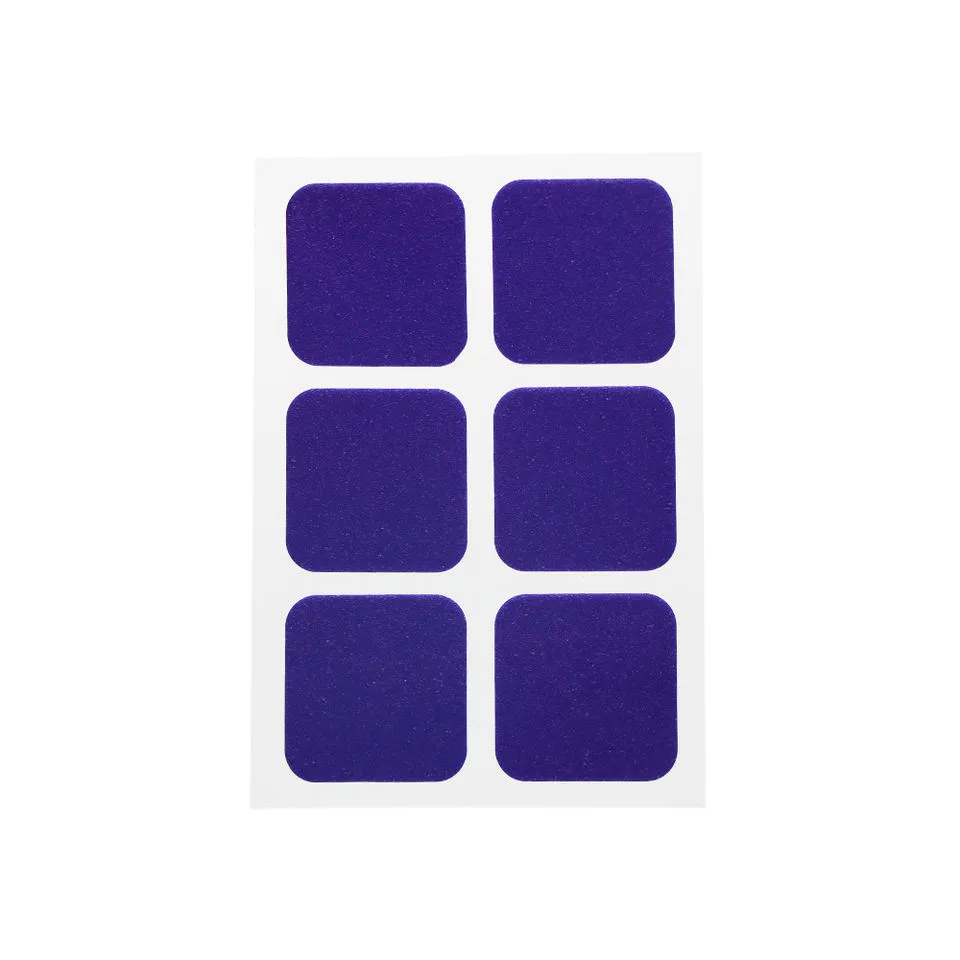
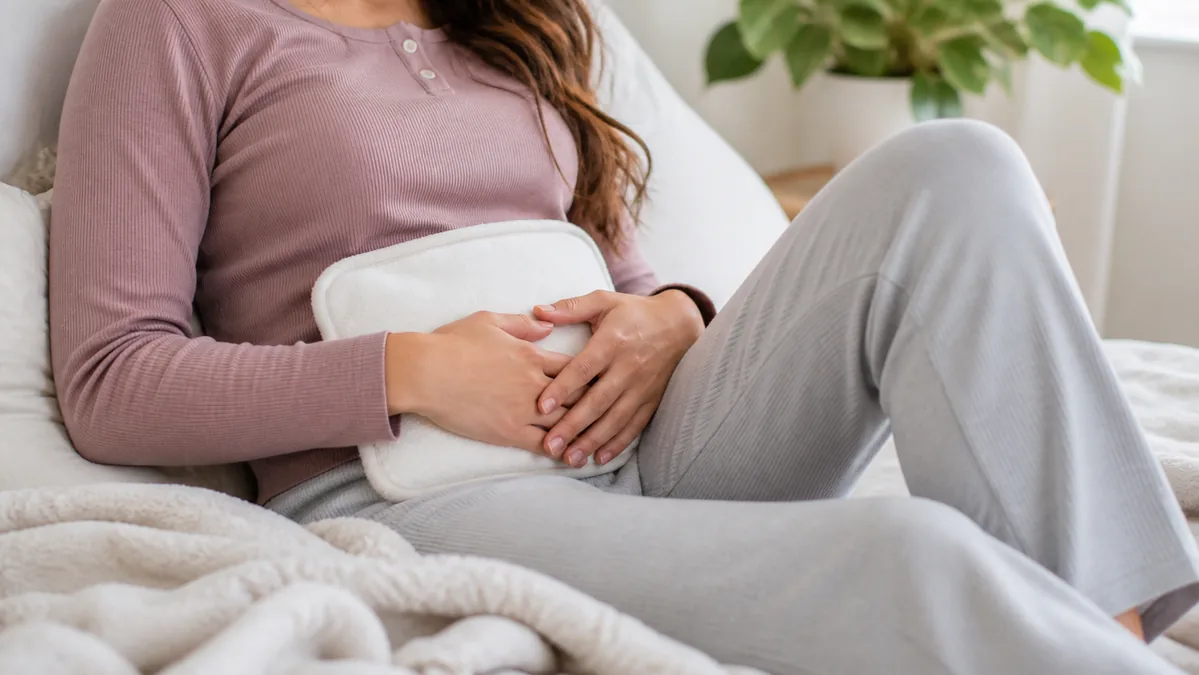
| Menstrual Heating Patch | Lower abdomen | Thin and flexible |
| Back Heating Patch | Lower or upper back | Larger heating area |
| Shoulder Heating Patch | Shoulder and neck | Compact or shaped design |
| Hand Warming Patch | Hands or pockets | Small and portable |
| Foot Heating Patch | Feet or shoes | Thin profile |
| Custom Heating Patch | Buyer-specific use | Customized size and structure |
Different applications may require different temperatures, shapes, adhesive systems, and heating times. For example, a lower-abdomen heating patch may use a different shape and flexibility level from a shoulder patch.
Heating Patches vs. Heating Pads: What Is the Difference?
Heating patches and electric heating pads can both provide warmth, but they are designed for different situations.
| Feature | Heating Patches | Electric Heating Pads |
|---|---|---|
| Power Source | Air activated | Electricity or battery |
| Portability | High | Medium |
| Disposable | Usually yes | Usually no |
| Size | Compact | Usually larger |
| Charging Required | No | Often yes |
| Best For | Travel, daily use, outdoor use | Home use |
The biggest advantage of air activated heating patches is portability. Users can carry individually packaged patches in a handbag, backpack, luggage, or travel kit and use them without looking for a power source.
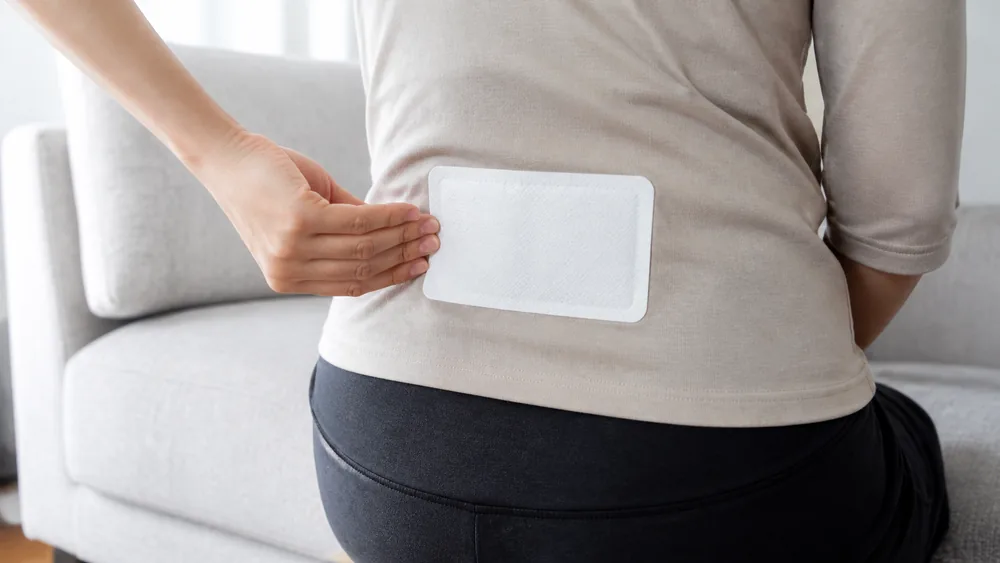
A heating patch can be designed for clothing-side application depending on product instructions.
How Long Do Heating Patches Stay Warm?
Heating duration depends on the product design. Common heating patch specifications may be developed around 6-hour, 8-hour, 10-hour, or other customized heating durations.
However, the number printed on the package should not be the only factor buyers consider. The actual user experience also depends on the heating curve. A good heating curve should generally provide relatively stable warmth rather than reaching a high temperature quickly and then dropping sharply.
Heating Formula
Different material ratios can change how fast heat is produced and how long it lasts.
Air Permeability
The outer material controls oxygen entry and therefore influences the speed of the heating reaction.
Patch Size
A larger body heating patch may require a different heating-material quantity and structure from a smaller patch.
Environmental Conditions
Ambient temperature and airflow can also influence heating performance. For B2B sourcing, it is better to evaluate both heating duration and temperature stability.
Where Can Heating Patches Be Used?
Heating patches can be developed for several everyday scenarios, including lower abdomen, back, shoulder and neck, outdoor activities, travel, and cold-weather daily use.
Some products are designed to be placed over clothing, while others may have different instructions. The correct placement should always follow the specific product label and buyer-market requirements.
What Materials Are Used in Heating Patches?
A heating patch usually contains several functional layers.
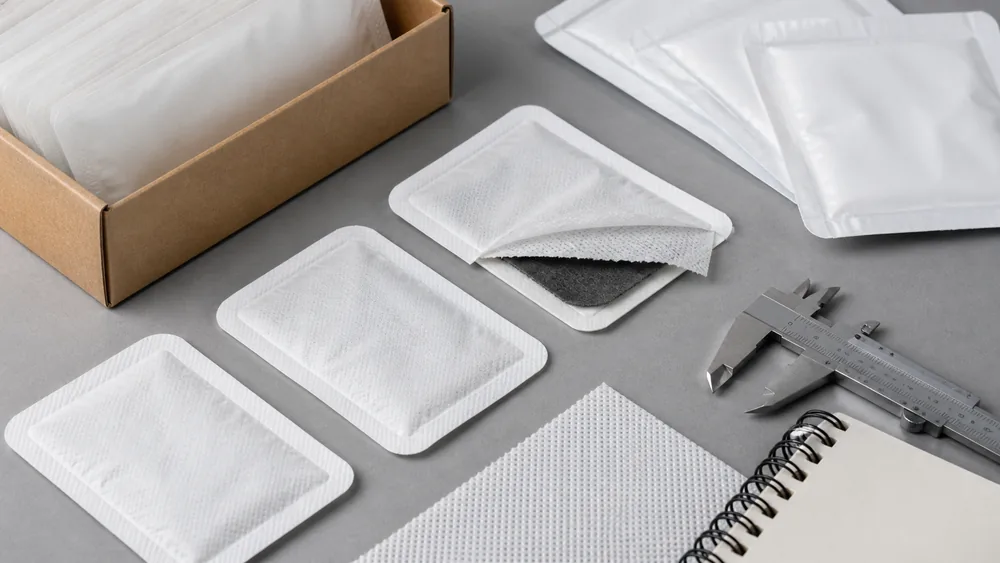
Material structure, sealing, and nonwoven texture affect heating performance and user experience.
1. Outer Nonwoven Layer
The outer layer helps provide softness, flexibility, and breathability. Material selection can affect both user comfort and oxygen flow.
2. Heating Material Layer
This is the functional core of the patch. It contains the air-activated material that produces heat after the packaging is opened.
3. Protective Layer
A protective or barrier layer helps contain the heating material and maintain the structure of the product.
4. Adhesive Layer
Some heating patches include adhesive so they can stay in position on clothing. The adhesive should provide enough holding strength without making the product inconvenient to remove.
5. Airtight Outer Package
This part is critical. The heating reaction should not begin before use, so the patch normally needs to be sealed inside an oxygen-resistant package until the user opens it.
Safety Tips for Heating Patches
Heating patches should be used according to the instructions provided for the specific product. General precautions may include:
- Do not use damaged patches
- Do not use a patch if the outer package has already been opened
- Follow the recommended placement instructions
- Stop use if the patch feels excessively hot or uncomfortable
- Keep unused products sealed until needed
- Follow age, skin-contact, and clothing-contact instructions provided with the product
For B2B brands, clear instructions and appropriate warning information should be part of the packaging development process.
How to Choose Heating Patches for Private Label
For brands, wholesalers, and distributors, sourcing private label heating patches involves more than choosing a color and adding a logo. Before sampling, confirm custom heating patch specifications with the supplier.
Heating Temperature
Ask the supplier about the expected working-temperature range and available test information. Temperature consistency is often more important than simply reaching a higher maximum temperature.
Heating Duration
Determine whether your product requires shorter or longer-lasting warmth. Common specifications may include 6, 8, or 10 hours, depending on the product.
Patch Size and Shape
The size should match the intended application. Possible options include rectangular, square, long strip, curved, or custom die-cut shapes.
Adhesive Performance
If the patch attaches to clothing, adhesive strength should be tested during sampling.
Packaging
Packaging protects the heating patch from oxygen before use. For retail products, packaging design also affects brand presentation.
Customization
- Custom logo
- Custom sachet
- Custom box
- Custom instructions
- Custom size
- Custom shape
- Custom heating duration
- Product formulation adjustment
What Should B2B Buyers Ask a Heating Patch Manufacturer?
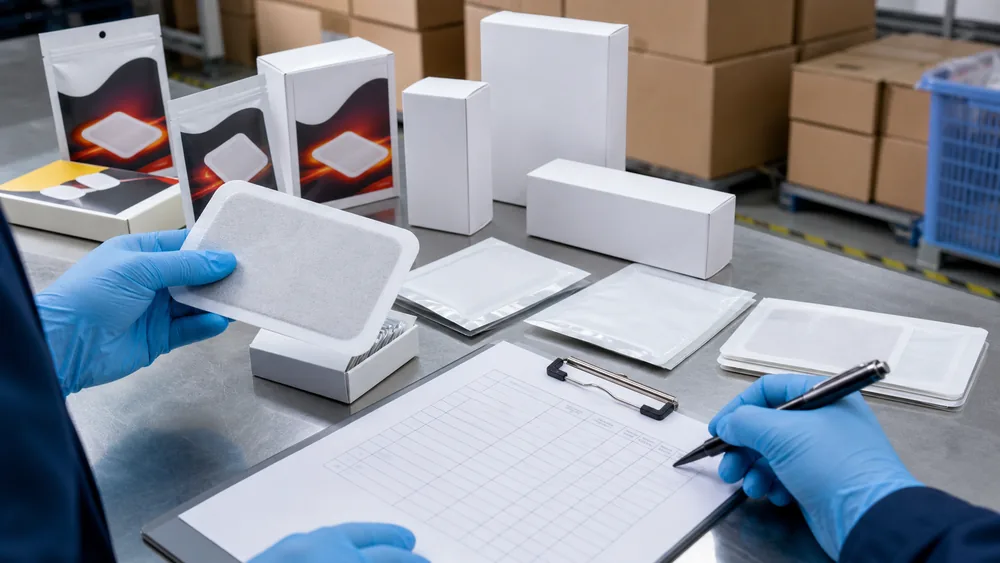
B2B buyers should verify samples, packaging, heating duration, and documentation before bulk orders.
Before placing a bulk order, buyers should confirm practical details with the heating patch manufacturer. This step is similar to using an OEM manufacturer checklist before production.
What heating durations are available?
Some suppliers offer standard specifications, while others can develop customized heating durations.
Can the size and shape be customized?
This is important if you are developing a product for a specific body area or market segment.
What is the MOQ?
MOQ may vary between an existing product and a fully customized private-label project.
Can the packaging be customized?
Ask whether the supplier can support individual sachets, printed boxes, instruction cards, barcodes, and other packaging requirements.
Are samples available?
Sampling allows buyers to evaluate heating performance, temperature stability, adhesion, size, packaging, and user experience before moving to bulk production.
What testing documents are available?
Ask for documents that actually apply to the product being sourced. Avoid relying only on general factory claims.
What is the lead time?
Production time can vary depending on quantity, packaging complexity, and customization requirements.
OEM and Private Label Heating Patch Options
Basic Private Label
This is the simplest option. An existing heating patch specification is used while changing the logo, individual packaging, outer box, and instructions.
Product Specification Customization
Brands may also request adjustments to patch dimensions, shape, heating duration, adhesive system, and product structure. These projects usually require additional samples and testing.
Formula Customization
For more specialized projects, the heating formulation may be adjusted to achieve a different heating profile. The more customized the product becomes, the more important the development and testing process becomes.
How Should Heating Patches Be Stored?
Unused heating patches should remain sealed until use. Because the heating material reacts with oxygen, damaged packaging can affect product performance.
- Packaging integrity
- Storage humidity
- Storage temperature
- Carton protection
- Shelf-life requirements
- Warehouse conditions
Brands and distributors should follow the storage recommendations provided for the specific heating patch.
FAQ About Heating Patches
What are heating patches?
Heating patches are portable warming products designed to generate sustained heat, commonly through an air-activated heating reaction.
How do self heating patches work?
Many self heating patches use iron-based heating material. When the package is opened, oxygen enters the patch and starts an oxidation reaction that gradually releases heat.
Do heating patches need electricity?
Most disposable air-activated heating patches do not require electricity, charging, or batteries.
How long do heating patches stay warm?
Heating time varies by formulation and product structure. Common products may be designed for approximately 6, 8, or 10 hours of heating.
Can heating patches be customized for private label?
Yes. Depending on manufacturing capability, buyers may customize branding, packaging, patch size, shape, heating duration, adhesive structure, and selected product specifications.
Choosing the Right Heating Patch Supplier
The right heating patch supplier should provide more than a standard product and a low quotation. B2B buyers should evaluate heating consistency, product specifications, sampling support, customization capability, packaging options, quality control, production stability, and bulk supply capability.
A well-developed heating patch should match the intended market, application, packaging position, and buyer requirements. Looking for custom heating patches for your brand? contact Fangdi to discuss private label packaging, customized specifications, and OEM development.
Ready to Talk to a Manufacturer Directly?
Tell us your product idea and target market — we’ll reply within one business day with samples, MOQ and lead time.
Get a QuoteMore From the Blog
Get Sourcing Tips in Your Inbox
New guides on OEM sourcing, formulation and compliance — no spam, unsubscribe anytime.